Scoring method 2.0.0 has been live since 2026-10-19 00:00 UTC. Each card's score starts at the editor's baseline and moves with real paid votes only. Read the changelog.
Everyone owns
the roof.
The roof leaks.
$1.00 a pixel · votes from about $5 · pick yours on the board
The Collective
Tier List
30 ranked · 10 candidates · on the kolhoz axis
Higher tiers ship things. Lower tiers form committees about why nothing has shipped.
One editor's read. Not financial advice, and certainly not a price prediction.
Open a chip to read the reasoning and see how comrades voted. The hammer votes kolhoz, the sickle votes consensus: $1 moves a project one pixel, votes from about $5, paid in crypto, recorded in public.
Each chip: market cap (Apr 2026) · kolhoz score ☭, 1 consensus to 500 kolhozK, 0 consensus to 100 kolhoz · top right, dollars on kolhoz over consensus, editor's placement includedreal votes only, then E, the editor's baseline
 Consensus
Tier S. Ship · No Theatre#TIER-S
 BTC
Bitcoin
—
—
Satoshi disappeared. The protocol is the protocol. No committee. The roof does not leak. Definitionally consensus.
02
 SOL
Solana
—
—
Anatoly's ship culture: even outages get fixed and post-mortemed. Decisive to a fault.
03
 HYPE
Hyperliquid
—
—
Single-purpose perp DEX run by its founder. Ships and captures real volume. No governance theatre.
Tier A. Ship · Some Theatre#TIER-A
 ETH
Ethereum
—
—
Vitalik-led, ships major upgrades on multi-year cadences. EIP committees and research energy keep it out of S.
05
 TRX
TRON
—
—
Justin Sun is many things. Kolhoz isn't one of them. Decisive (and chaotic) is still decisive.
06
 LINK
Chainlink
—
—
Oracle infra, focused, low drama.
07
 NEAR
NEAR Protocol
—
—
Illia-led, real ship cadence: chunk-by-chunk sharding actually landed. AI pivot is work, not a pitch deck.
08
 XMR
Monero
—
—
One job (privacy), done with discipline. Low theatre.
09
 TAO
Bittensor
—
—
Decentralised ML with an opinionated team. The subnets ship. Borderline S. Subnet politics keep it here.
10
 CC
Canton
—
—
Enterprise privacy chain. Committees by nature, but Digital Asset is decisive.
Tier B. Ship w/ Caveats#TIER-B
 BNB
BNB
—
—
Centralised but decisive in the CZ era. Post-2023, the vibes are more diffuse. The chain still works.
12
 AVAX
Avalanche
—
—
Clear vision, and it ships. The subnets-pivot-pivot-pivot history lands it here, not A.
13
 TON
Toncoin
—
—
Telegram aligned the chain operationally. Product-market fit is real, and the upgrades land.
14
 HBAR
Hedera
—
—
Governance council is a committee by design. But they actually ship, so B not C.
15
 BCH
Bitcoin Cash
—
—
Multiple fork dramas, but the chain itself runs.
16
 LTC
Litecoin
—
—
Plumbing. Boring in a good way. No drama.
17
 FIL
Filecoin
—
—
Protocol Labs actually stores data. Long whitepapers and long timelines, but the thing works.
Tier C. Committee Mode#TIER-C
 XRP
XRP
—
—
"We're going to revolutionize cross-border payments" since 2012, plus a multi-year SEC opera.
19
 SUI
Sui
—
—
Ships, but the unlock schedule and insider tokenomics fit the "convenient privatisation" half of the kolhoz definition.
20
 XLM
Stellar
—
—
Foundation-driven at low velocity. Feels like a polite committee.
21
 POL
Polygon
—
—
Matic → Polygon → zkEVM → AggLayer → POL rebrand. Ships, but pivots by committee.
22
 ATOM
Cosmos Hub
—
—
ATOM 2.0 debate: six factions, three forks of the same proposal. IBC works. ATOM itself is a committee.
23
 ALGO
Algorand
—
—
Silvio Micali's academic project, foundation-heavy and slow. Peer review without the ships.
24
 ZEC
Zcash
—
—
Single-purpose privacy that should be A. The perpetual ECC/Foundation drama and slow movement keep it lower.
Tier D. Leaky Roof
Loud Committee#TIER-D
 ADA
Cardano
—
—
Peer-review-everything, methodical to a fault. Classic "we're researching" energy. The platonic kolhoz-adjacent.
26
 LEO
UNUS SED LEO
—
—
Bitfinex-controlled exchange token, redeemed from exchange profits. Nikolai's mysteriously full firewood pile.
27
 DOT
Polkadot
—
—
OpenGov is a kolhoz ethnography. Parity drama, multi-year parachain promise, ecosystem-fund-spends-on-ecosystem-fund.
28
 ICP
Internet Computer
—
—
Be-the-internet promise since 2016. DFINITY foundation and a cultish forum culture. Real adoption is slow.
29
 CRO
Cronos
—
—
The 2021 token-supply-change incident is a textbook kolhoz move: "we changed the rules but didn't really tell anyone".
30
 WLD
Worldcoin
—
—
Altman's Orb-scan-the-world plan, banned in several jurisdictions. Ethics-committee theatre over extractive biometrics.


 Kolhoz
Candidates · not ranked yet
 PI
Pi Network
—
—
Mine-by-tapping, perpetual mainnet launch, invite pyramid. Maximum theatre, zero roof.
 M
MemeCore
—
—
Chain-as-marketing. Meme-economy governance by vibes, and the roof is a meme too.
 VET
VeChain
—
—
Corporate committee governance. Steering committee over real usage.
 XDC
XDC Network
—
—
Enterprise-consortium chain: all roof, no fire. Committee-led trade finance promises.
 MNT
Mantle
—
—
BitDAO rebrand as an L2. DAO-driven: governance first, shipping second.
 MON
Monad
—
—
High-throughput hype, long private beta, heavy VC allocation. Committee by capitalisation table.
 APT
Aptos
—
—
Meta-spin Move chain with a rich foundation and endless unlock schedules. Committee by default.
 DASH
Dash
—
—
Masternode DAO treasury is the entire culture. Funding proposals are the product.
 SEI
Sei
—
—
Trading-optimised L1 with heavy VC backing. Parallel EVM promise, unlock-driven price action.
 XTZ
Tezos
—
—
Liquid proof-of-committee. Governance is the product. Shipping is optional.


Only dollars
vote.
Up or down.
Each project is a chip. Top: consensus, someone ships. Bottom: kolhoz, the roof leaks.
The editor sets the start, money moves it. A credited vote is final and pays nothing back: no payout, no token, no prize.
Totals and the average count real paid votes only. E is the editor's call, not dollars.† Every chip starts where the editor put it: the totals include that day-one placement. Open a chip to see its votes.
How a vote moves a chip
- The editor's day-one placement was entered as dollars, and those count as votes.†
- Only the gap between the sides counts. Equal money sits at 250.
- One point costs about — now: all money on this list's ranked chips, divided by 10,000.
- Every vote grows that money, so other ranked chips drift toward 250, unless pinned at an edge.
- There is no cap on one chip's move. Money never decays.
- Net money counts: both sides cancel out.
- Capped at — points; — net gets halfway.
- Money never decays; later votes can undo it.
How far money goes
A chip at 250, one vote, on this list's money today:
$10 on kolhoz moves it down about — points.
$250 on kolhoz takes it to —.
$1,500 on kolhoz takes it to —, and $1,500 on consensus, to —.
The formula
N = D − U
K = clamp(E + β · N / (κ + |N|), 0, 100)
β = — points · κ = — · method —. U, D: consensus and kolhoz dollars. K stops at 0 and 100. E changes only when a quarter starts, with the reason on the changelog. Tier from K as shown, to one decimal.
The waiting strip
—avg per ranked chip
—to be pre-approved
—at risk below
A candidate at 3× the average is pre-approved: a mark, not a seat.
A ranked chip under a third of it is at risk: a red mark, not a removal.
Candidates have no E, K or tier yet: unassessed.
Fine print
- One $100 payment or five $20 ones move a chip the same, fees aside.
- Anonymous: no name, account or payer address in the vote history.
- Not secret: providers may check; wallet payments are public on-chain.
- Tiers are cheap near a boundary.
- A tier step can cost a few dollars or a very large sum.
The formula
y = 250 + (D − U) / CPP
CPP = T / 10 000
U, D · consensus and kolhoz dollars. T · now —. One point is one pixel of the board.
Every change to the method, dated and explained, and each chip's starting score: the changelog.Method 2.0.0 replaces this one on 2026-10-19 00:00 UTC. What changes, and each chip's starting score: the changelog.
Let's make consensus less kolhoz.
Theory & Practice.
Sometimes the roof is not on fire, it's just a leaky roof.
Kolhoz is when everyone owns everything so nobody owns anything.
And when something useful lies unseen, suddenly it's always mine and never anyone else's.
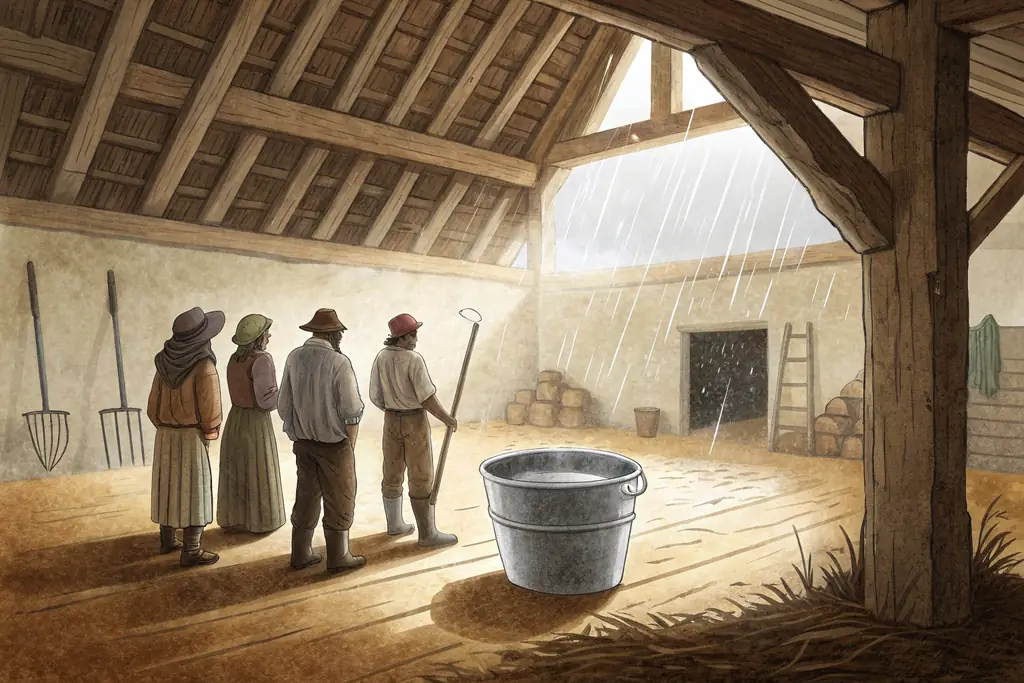
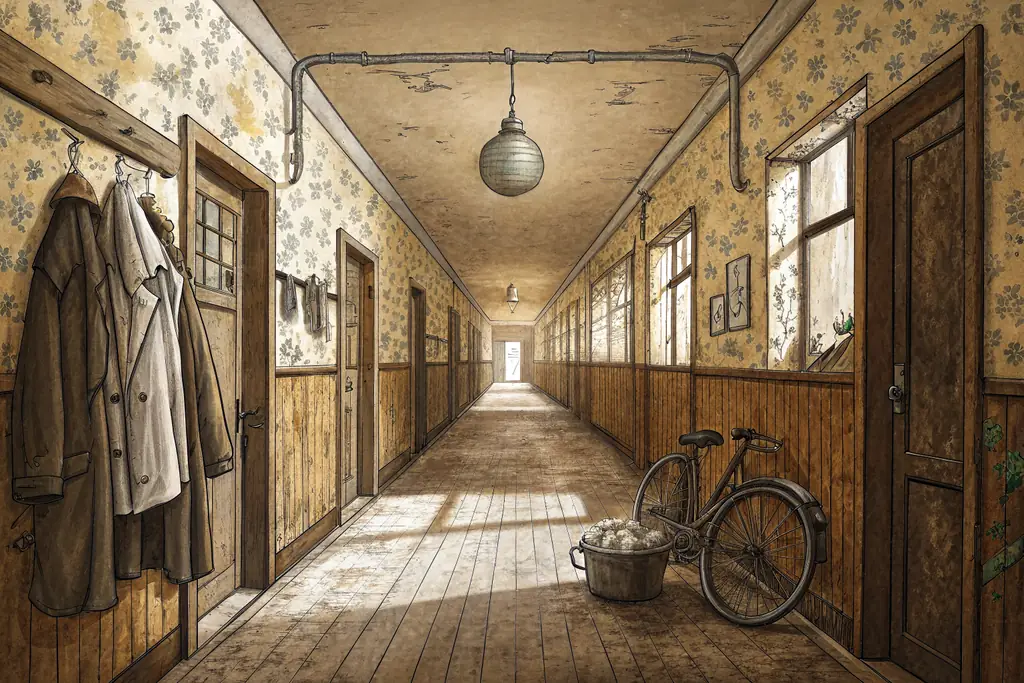
A kolhoz was a Soviet collective farm: owned by the whole village, fixed by nobody.
In town, the kommunalka: ten families, one hallway, one dead bulb, a month in the dark.
The fix:
- One owner: one name per result, one door to knock on.
- Team effort: each member owns a clear piece.
- Practical dialectical materialism: try, look, fix, repeat.
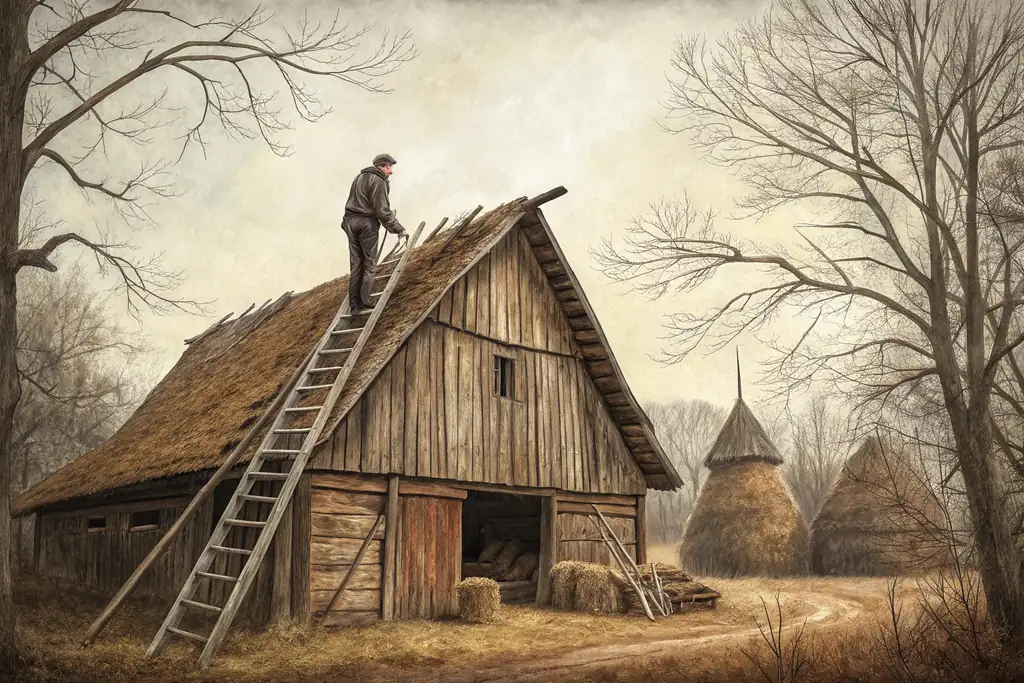
A blockchain is a record that thousands of computers share and no company owns. On paper, a kolhoz.
Even so, their consensus rots: DAOs vote a lot and fix little, memecoin insiders hype and dump.
The fix is KolhozChain:
- Skin in the game: real money to the treasury; no payout, no token, no prize.*
- A record anyone can check: each chip's votes, and a public ledger (planned).
- A loop that learns (planned): try a rule, watch, fix, log it.